Katy approves Zipline drone delivery hub at 27240 Katy Freeway
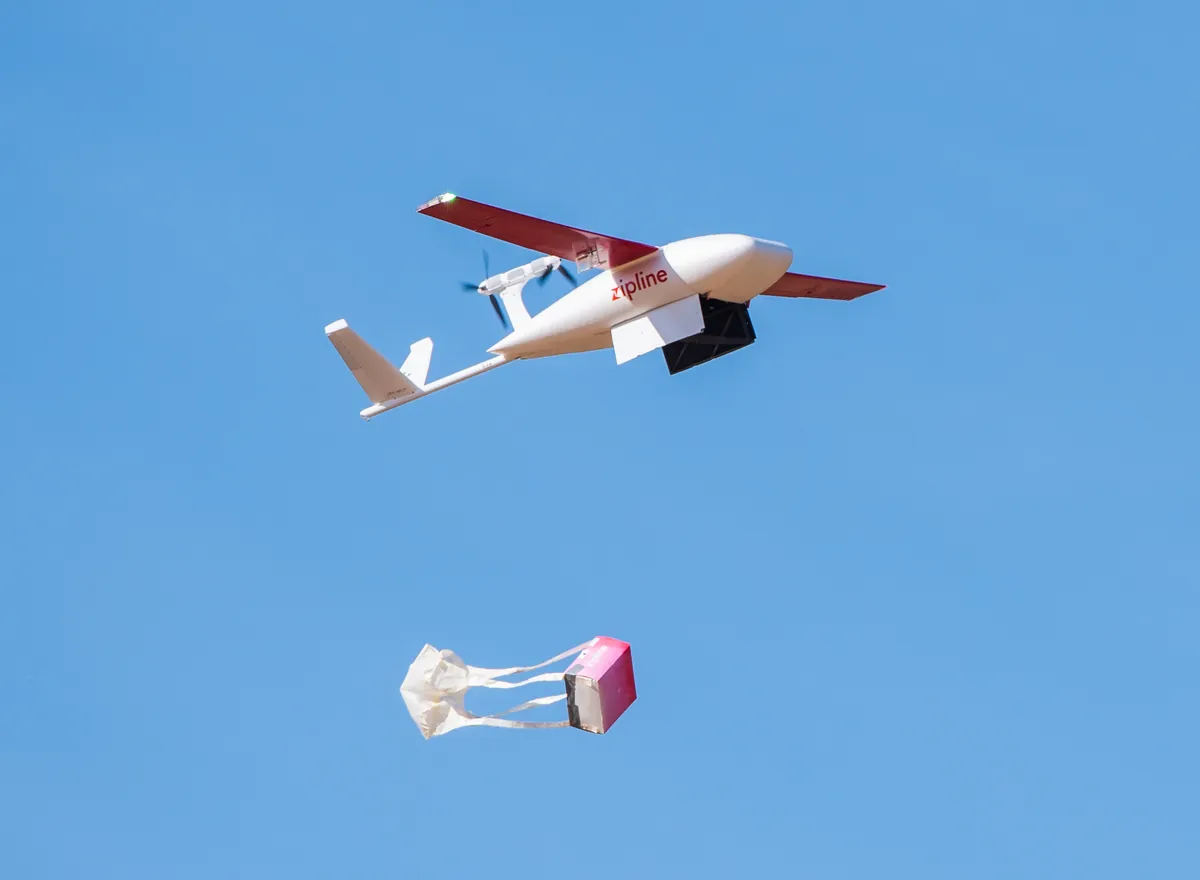
Katy City Council approved a zoning change on Monday that clears the way for a Katy Zipline drone hub behind the shopping center at 27240 Katy Freeway, north of Interstate 10 near Buc-ee’s, with the station expected to open in about three to six months once building permits and construction are complete.
The November 9 action changed the zoning rules for the West Ten Business Park planned development district so the drone station can be built there. Zipline Development Manager Jason Drews told the council the station would sit behind the retail businesses on the northeast part of the property. The site is at 27240 Katy Freeway, north of Interstate 10 near Buc-ee’s.
Plans call for six docking and charging towers. Each tower can hold six drones, so the station could hold as many as 36 aircraft. The site would also hold electrical and network equipment. Drews described a facility that would run on its own and would not need workers stationed there.
Company representatives told the council they worked with city staff to pick the location after looking at another site. The planned station is separate from a Zipline hub already operating off Highway 6 North in Cypress.
Zipline runs drone deliveries for restaurants and shops that take part in the service. A customer sets up an account in the Zipline app, enters an address and picks a business that takes part. Workers at the restaurant prepare and package the food before it is picked up for delivery.
The company says its electric drones can carry orders weighing as much as eight pounds and fly at speeds as high as 70 miles per hour. The drone stays more than 300 feet overhead while a pod holding the order comes down on a tether. After the order is left at the delivery spot, the aircraft pulls the pod back up. Zipline says the average time from ordering to delivery is 18 minutes, a company figure that was not identified as a Houston average.
Company representatives told the council the delivery range is about three miles, then said coverage is more involved than drawing a circle around the hub. Because a drone first flies to pick up an order, the spots of both the business and the customer help decide whether a delivery is possible.
One Katy restaurant already uses the service. Jesus Lee, manager of Adrian’s Mexican Street Food, said the restaurant’s Katy location receives about 15 to 20 drone orders a week. Lee said Adrian’s has used Zipline for about six months, after the company approached one of the restaurant’s Cypress locations. He said curiosity drew him to the technology. “There was actually a lot more curiosity, really, because I was like, ‘How are you guys doing it?'” Lee said.
Lee described workers loading packaged meals into a pod that comes down at a set pickup spot before the drone lifts it back up. He said the business has seen more to-go orders, although he did not give figures showing how much of that rise came from drone delivery. He said he hopes being among the businesses on the service will bring in customers who have not ordered from the restaurant before. “So I mean, it’s another opportunity as well for growth,” Lee said.
The Katy expansion has a personal tie for Lee, who said he was born and raised in the community and had asked Zipline before about expanding there. “So I was excited, and I wanted my community to be a part of this as well,” he said.
The businesses that will take part through the new West Ten hub have not been confirmed. A confirmed list of businesses, customer delivery fees and a precise service area map also remain outstanding.
Council members asked Zipline representatives about weather monitoring, backup systems and how the company handles problems. Zipline said its aircraft go through automated preflight safety checks and have backup systems, including a parachute. Representatives said monitoring centers and sensors on board help track weather and flight conditions. They said the company can stop flights when needed and work with local law enforcement during emergencies. They said the monitoring centers can halt flights ahead of dangerous conditions.
Company representatives said keeping the aircraft hundreds of feet overhead while the delivery pod comes down is meant to cut noise near customers’ homes. They said takeoff is the loudest part of the process and that charging stations are placed in commercial areas on purpose.
Council members also asked whether the drones carry cameras and what happens to the video they record. A representative said cameras and sensors help the aircraft find its way and deliver safely around obstacles, including people, pets and backyard furniture. The representative first said video was not stored, then said footage is kept for a short time so a small group of engineers can review it if an incident happens. The discussion did not set a specific retention period.
Zipline told the council it does not deliver to schools and treats public school property as a “keep out zone” that its aircraft avoid flying over.
No exact opening date has been announced. Zipline representatives said the next step after the zoning approval is the city’s building permit process. Drews estimated permits could take about four to eight weeks, followed by about eight to 10 weeks of construction. Asked when service could begin, he gave an overall estimate of about three to six months.
The company’s media team said it was off for the Veterans Day holiday and gave company information attributed to Zipline, along with access to images and footage. Residents who want to know whether service is available at their address now can check the Zipline app. Current availability does not show when the proposed Katy station will begin serving customers.
The Katy station would be the latest automated system to reach the Houston area. The Tesla Robotaxi zone now reaches downtown Houston, and Foxconn has put humanoid robots to work in Texas.