
The Channel That Made Houston a Port
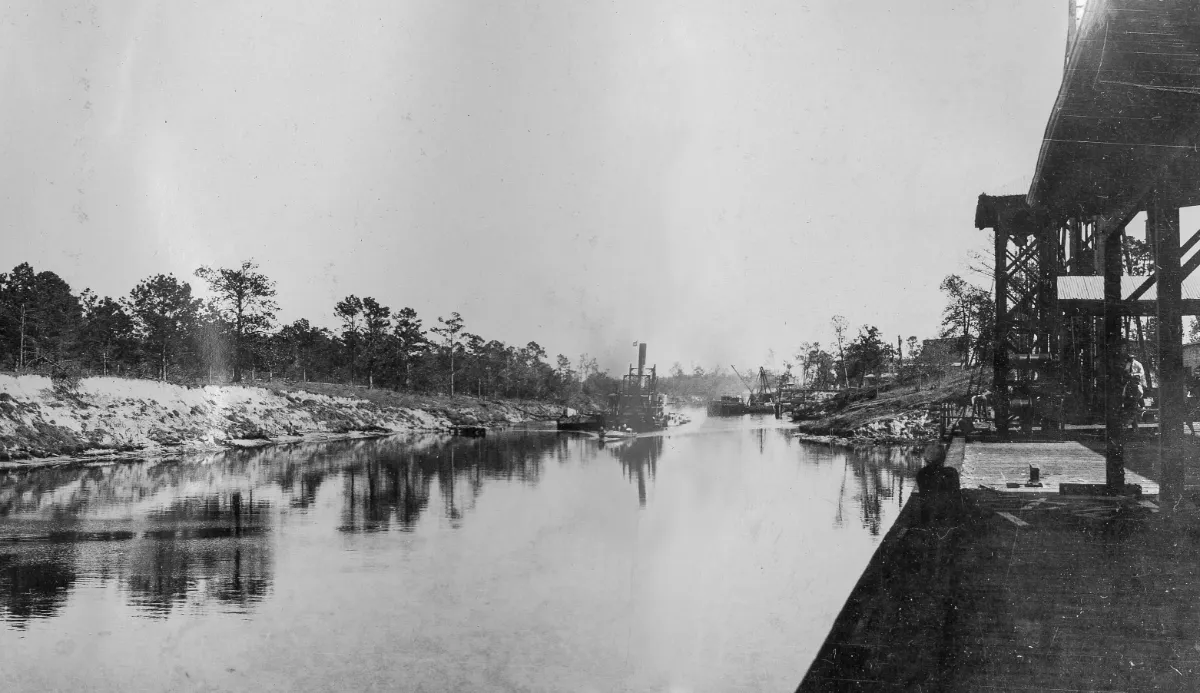
On the morning of Nov. 10, 1914, thousands of Houstonians gathered at the Turning Basin, the head of a channel they had voted to pay for, and waited for a cannon to fire. The man who fired it was in Washington.
In the White House, President Woodrow Wilson pressed an ivory button wired to a cannon in Houston, and the salute rang out over the water. Then Sue Campbell, the daughter of Mayor Ben Campbell, stood on the deck of the U.S. Revenue Cutter Windom, dropped white roses into the channel and gave the place its new name: the Port of Houston.
It was an unusual thing to christen. Houston sat well inland, at the end of a waterway that would run more than 50 miles to the Gulf of Mexico.
For most of its life, the city had shipped through somebody else. Barges carried cargo down Buffalo Bayou from the foot of Main Street, and at Galveston the goods were moved onto seagoing ships. The bayou itself was swampy, marshy and overgrown, open only to steamboats and shallow boats. Congress had chartered a Houston ship channel as early as July 1870, but a charter was not a channel.
The man most often credited with changing that was a lawyer from Huntsville. Thomas Henry Ball was born there in 1859, served three terms as the town’s mayor and was elected to Congress in 1896. He served four terms and spent many of those years trying to persuade his colleagues that Houston deserved a deep-water port.
His argument rested on an offer. Under what became known as the Houston Plan, the people of Houston would pay part of the cost of dredging the channel and the federal government would pay the rest. The House Rivers and Harbors Committee accepted the idea unanimously.
Ball came home to Houston in 1903 to practice law. For years afterward, he gave free legal counsel to the push for a navigation district, the work that later earned him the nickname “Father of the Port.”
The local share came due in 1911. Harris County voters were asked to approve $1.25 million in bonds, and they did, by a margin of 16 to one. The vote created the Harris County Houston Ship Channel Navigation District, the body known today as Port Houston. When the bonds needed buyers, Jesse H. Jones asked the city’s banks to take them. The issue sold out, and the dredges went to work.
On Sept. 7, 1914, the dredge Texas finished widening the channel, which was first cut to a depth of 25 feet. That same year, Ball ran for governor of Texas and narrowly lost the Democratic primary. So when the channel he had fought for finally opened that November, Ball held no public office.
The celebration did not bring the ships at once. A few vessels came up the channel in 1915, but many captains doubted that it was as deep as promised. The first public wharves were finished a year after the dredging, and World War I made new customers hard to find. The Southern Steamship Company was reluctant to offer regular service, so 100 Houstonians signed a bond promising $1,000 each if the line lost money. The company turned the bond down and sent its first ship anyway. The Satilla arrived carrying 75 carloads of merchandise.
After that, the channel began to fill in its promise. By 1930, eight oil refiners had set up along its banks. That same year, the cruiser USS Houston sailed up the channel, and about 250,000 people came to see her during her week-long stay.
Today the channel runs 52 miles and handles more than 8,000 vessel calls and 200,000 barge movements a year, according to Port Houston. It serves the largest petrochemical complex in the nation, stretching past towns like Pasadena that grew up along its banks.
Who built it depends on how the story is told. Ball’s name is on a map: Tomball, a town on the railroad he once represented, was named for him. But the money came from county voters, the bonds were carried by local banks, the first steamship line came with a pledge from 100 residents, and Washington matched the city’s share. Fentress Bracewell, a former chairman of the port’s governing commission, once summed it up this way: “Houston is truly the town that built a port that built a city.”
Ball died in 1944 and is buried at Forest Park Cemetery in Houston. Readers who know Houston today, or who followed the old San Felipe road in our story on Freedmen’s Town, have seen how often the city has been shaped by the routes that led into it. This one began with a wire from Washington, a cannon at the Turning Basin and a handful of white roses on the water.


